
Ouachita Parish Sex Offender Checks
The primary public channel is the Louisiana State Sex Offender and Child Predator Registry, managed by Louisiana State Police BCII. It supports name and geographic approaches and links the public record to the responsible registering agency. No separate Ouachita public registry database was confirmed.
Start with a complete name when checking a known person. For neighborhood awareness, use parish, city, ZIP, address, radius, or map tools offered by the live interface. Confirm identity with photograph, physical description, address, and offense details rather than relying on a name match alone.
Louisiana Search or National Search
The Louisiana registry is the best starting point for Ouachita-specific profiles and state tier information. The federal National Sex Offender Public Website searches participating jurisdictions when a person may have moved across state lines. Because participation and update paths differ, a national no-result should not override a confirmed Louisiana profile.
The NSOPW interface provides the official multijurisdiction search.
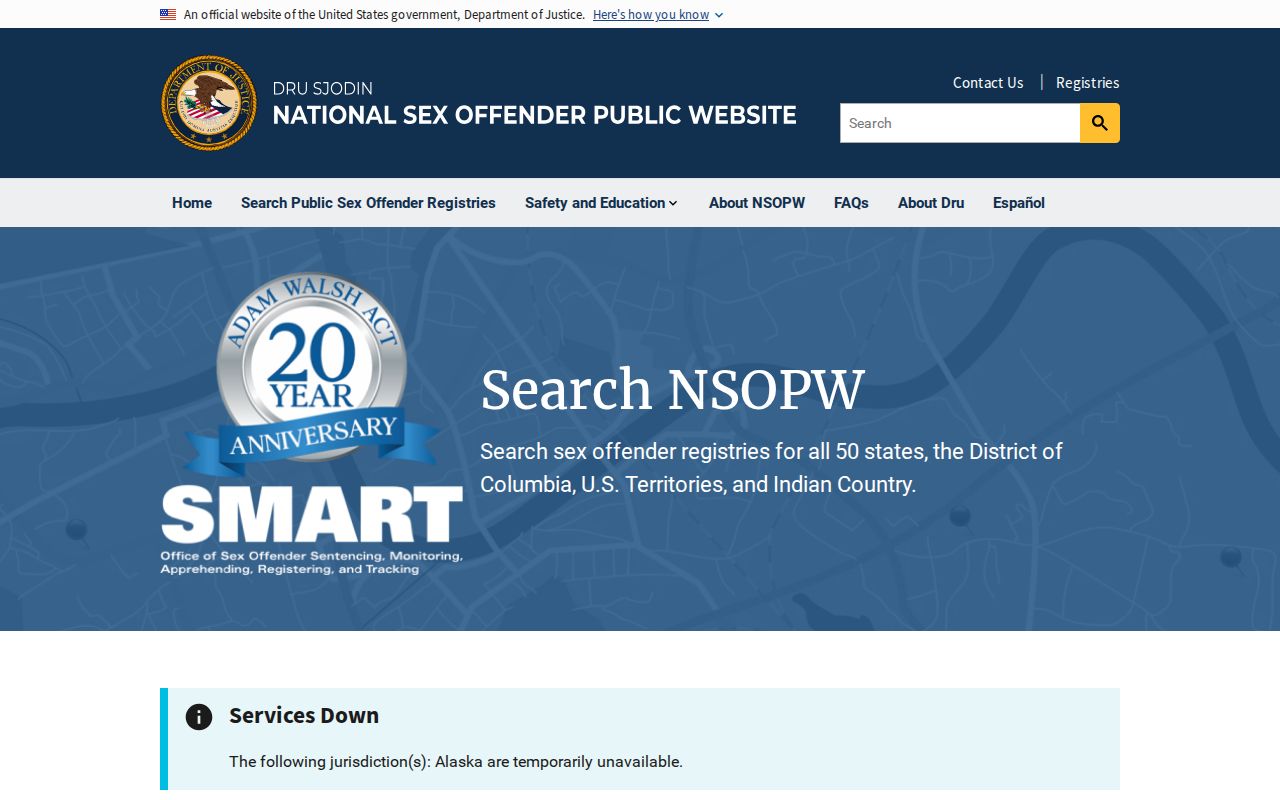
Open a participating jurisdiction's source profile to verify a national result.
Louisiana Registry Searches
LSP's registry landing page leads to the public search and explains the program. Search controls can change, so read and accept the live conditions of use before entering criteria.
The LSP registry landing page is the official Louisiana starting point.
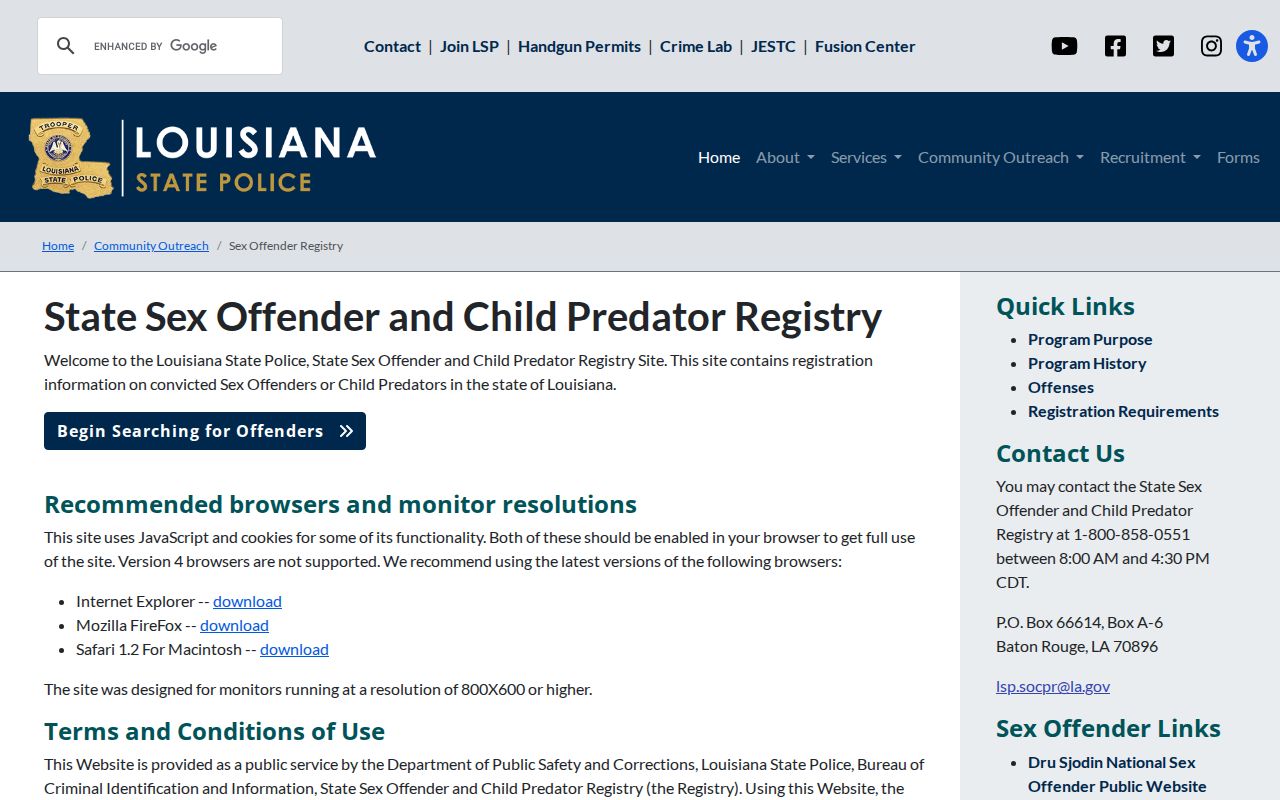
Use its current search link rather than a saved third-party profile.
LSP also publishes the registry through its official secure site address.
Both manifest captures refer readers back to the maintaining state agency.
- Open the LSP registry search and accept its conditions of use.
- Enter a name, or choose an address, city, ZIP, parish, radius, or map search offered by the interface.
- Compare the result list by photograph, age, physical details, and location to avoid a same-name mismatch.
- Open the full profile and review offense, tier, address, status, and verification information together.
| Field Label | Type | Required | Notes |
|---|---|---|---|
| Last name | Text | No | Use with first name for a known person. |
| First name | Text | No | Narrows common surnames. |
| City / ZIP | Text/select | No | Useful for Monroe-area geography. |
| Parish | Select | No | Choose Ouachita for parishwide results. |
| Address / radius / map | Map | No | Use when available for proximity awareness. |
Local Registration and Verification
Registrants report to the responsible local law-enforcement agency and must keep required information current. Residence, employment, school, vehicle, and online-identifier duties can produce changes between visits. A public profile should therefore be read with its last verification and status fields. For a suspected compliance problem, contact law enforcement; do not investigate or confront the household.
Registry Profiles: What They Show
A Louisiana public profile can combine identifiers, current registration details, qualifying offense information, and compliance status. It is a statutory notification record, not a complete criminal-history report.
| Name & Aliases | Published legal name and reported aliases used to distinguish identity. |
|---|---|
| Photo & Physical Description | Photograph plus reported age or birth date and physical characteristics. |
| Registered Address | Residence and other location fields made public under Louisiana law. |
| Offense & Statute | Qualifying offense, jurisdiction, conviction date, and statutory information when shown. |
| Level / Tier | Louisiana Tier I, II, or III classification and associated duration. |
| Registration Status | Compliance, absconded status, registering agency, and verification dates where displayed. |
Read Status and Dates Together
A profile address without its verification date can be misleading. Review the registering agency, most recent verification, status, and any absconded notation as one group. If an address appears stale or a person seems absent, report the concern to the listed agency. The registry is not a real-time tracking system.
Registration Levels and Duties in Louisiana
Louisiana assigns tiers by the qualifying offense rather than a simple prediction of individual risk. The baseline durations are 15 years for Tier I, 25 years for Tier II, and life for Tier III. The official offense table controls classification. Verification frequency also depends on tier and statutory duties; confirm the current requirement with LSP or the registering agency.
The LSP tier and offense table identifies qualifying categories.
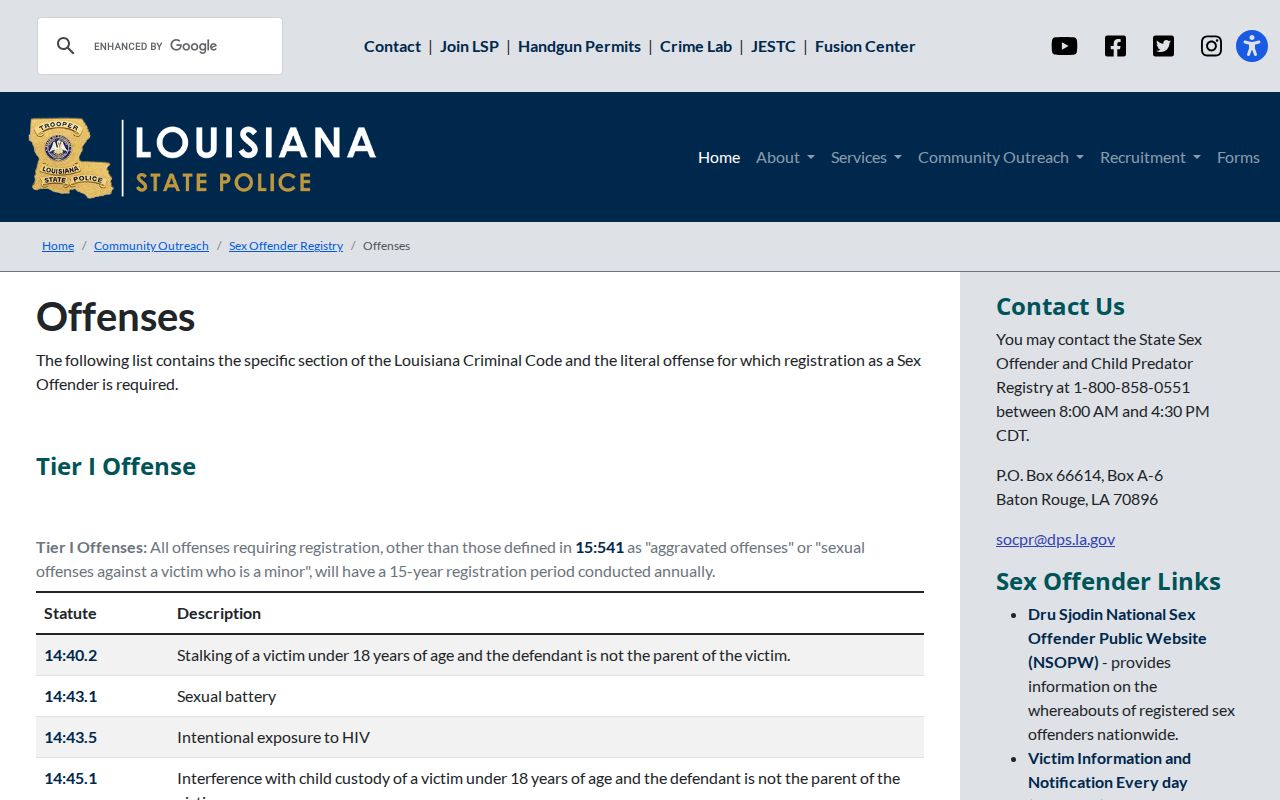
Read the offense table rather than inferring tier from a profile label alone.
The state's registration-requirements page explains reporting and notification duties.
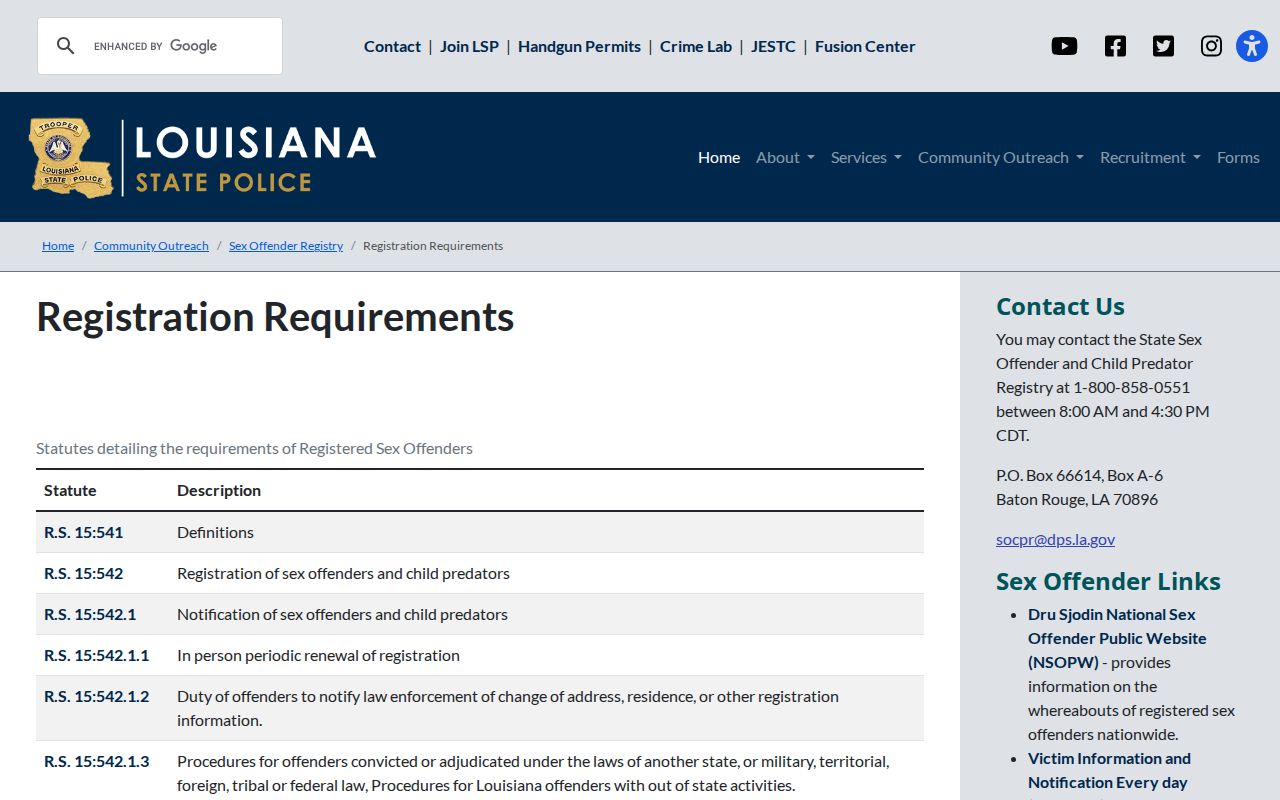
Current statutory instructions control when duties or procedures change.
| Level / Tier | Duration | Verification Frequency |
|---|---|---|
| Tier I | 15 years | Annual in-person verification. |
| Tier II | 25 years | Semiannual in-person verification. |
| Tier III | Life | Quarterly in-person verification. |
Moves, Changes, and Community Notice
Louisiana registration rules require reporting covered changes and provide community-notification mechanisms. Search results may therefore change after a move, a verification event, or agency correction. For continuing neighborhood awareness, use any address-alert option visible in the live registry rather than repeatedly relying on an old screenshot or saved result.
What the Registry Cannot Answer
A registry profile is limited to information Louisiana law makes public for a person with a qualifying registration duty. It is not a complete list of every sex-related arrest, every criminal case, or every person who may present a safety concern. It also does not predict whether a registrant will reoffend. Tier is tied to the qualifying offense and statutory category, not a personalized risk score.
Use Court Case Lookup when the question concerns the underlying Ouachita court docket or final judgment. Use an agency report request for a police narrative, subject to restrictions protecting victims and confidential material. Keeping those sources separate prevents a public notification profile from being stretched beyond its legal purpose.
If a Profile Appears Outdated
Note the person's name, profile identifier, displayed address, status, registering agency, and verification date. Then contact the agency shown on the profile or Louisiana State Police registry staff through the official landing page. Describe the apparent discrepancy without publishing extra personal information or attempting an in-person check.
An address difference does not by itself prove noncompliance. A move may be in the reporting process, the public interface may lag an agency update, or the viewer may have matched the wrong person. Law enforcement can compare the report with nonpublic registration data and determine whether follow-up is appropriate.
Using Address and Radius Results
Geographic searches are most useful when the starting address is entered carefully. Confirm the city, ZIP code, street direction, and map pin before interpreting distance. A radius is measured by the registry interface and does not necessarily follow walking routes, school zones, municipal boundaries, or parish lines.
Open each result rather than counting map markers alone. Multiple registrants can share a marker, an address can fall just beyond the selected radius, and a work or school location may be represented differently from a residence. Save the date of the search if it supports a personal safety plan, then refresh the official registry when circumstances change.
Using Registry Information Lawfully
Registry information is intended for public awareness and safety planning. Use it to understand official notifications, confirm a published profile, and make lawful personal or family safety decisions. Report errors to the registry or responsible agency so the custodian can investigate.
No harassment or vigilantism: Do not use registry information to harass, threaten, intimidate, or injure a registrant or anyone in the household. Use of the data must remain within Louisiana law, and official information should be verified with the maintaining agency.