
Criminal Court Cases in Ouachita Parish
The Fourth Judicial District Court is the court of general criminal jurisdiction for Ouachita and Morehouse Parishes. Its Ouachita docket includes felony prosecutions and parish-level misdemeanors. The district attorney chooses charges, but the clerk opens the numbered case and preserves the official filings. A case number is therefore a stronger locator than a name alone.
The Ouachita Parish Clerk of Court is the custodian for the filed district-court record. Municipal courts keep their own limited-jurisdiction dockets, so a Monroe or West Monroe matter may require a separate municipal-court inquiry if no 4th JDC case was filed.
One Event, Three Different Records
A booking, an OPSO narrative, and a court file can describe the same incident without being interchangeable. The Arrest Search route shows custody and booking facts. OPSO Records/Identification keeps the agency report. Clerk Connect shows the prosecution after filing. If the court search is empty, that can mean charges were not filed, the case is too new, the spelling differs, or the matter belongs to another court.
Ouachita Parish Case Record Searches
The clerk consolidated its civil, criminal, and property inquiries in paid Clerk Connect in 2023. Access costs published by the clerk are $20 for 24 hours, $75 monthly, or $800 yearly; document images cost $0.50 per page. Card transactions carry a 3.49% convenience fee with a $1 minimum. Recheck current pricing before purchase.
The Clerk Connect interface shows the paid portal used for Ouachita criminal inquiries.
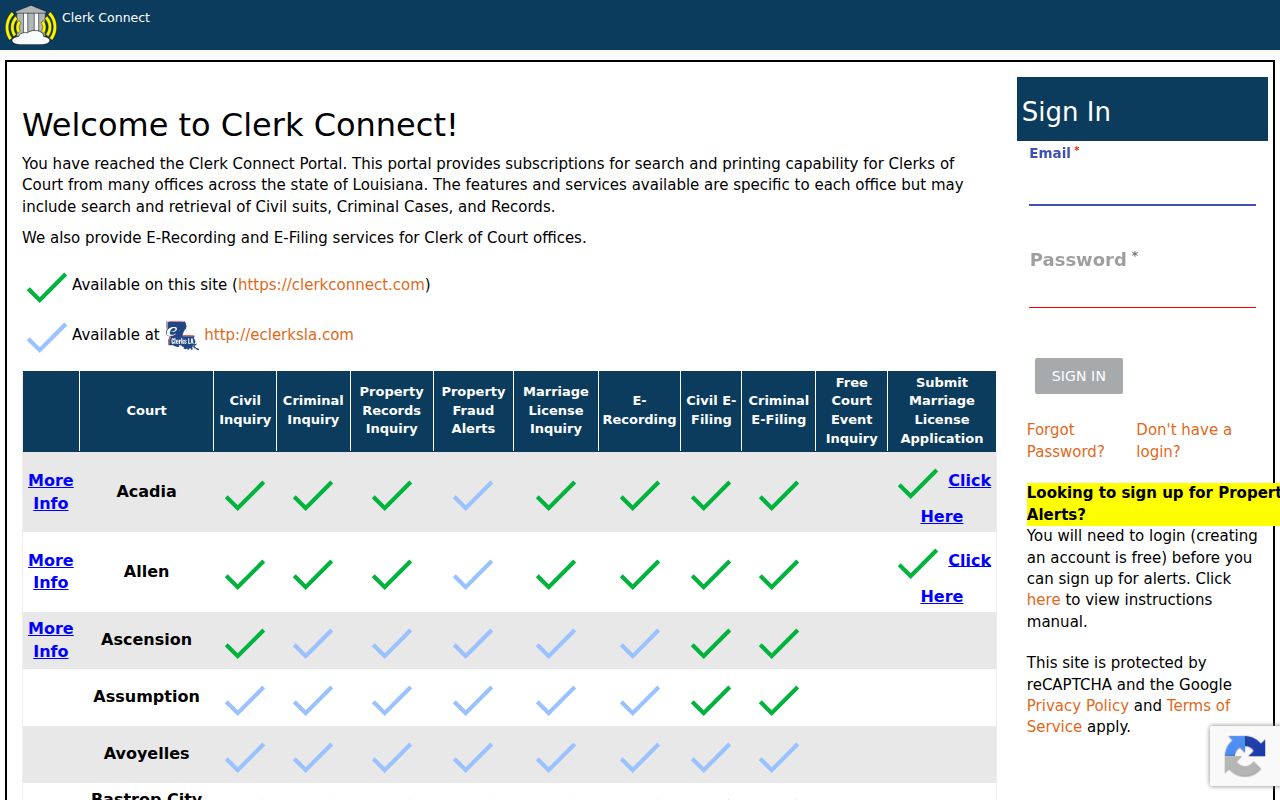
Use the portal as an index and ordering channel, then verify certified-document needs with the clerk.
- Create or open a Clerk Connect account, select Ouachita Parish, and choose Criminal Inquiry.
- Enter the exact case number when known; otherwise combine the defendant's last and first names.
- Use the available year or date controls to narrow common names and long result lists.
- Open the matching case and read the docket chronology, charge, status, and disposition fields together.
- Order available page images or contact the clerk for certified copies and files not represented online.
| Field Label | Type | Required | Notes |
|---|---|---|---|
| Parish | Dropdown | Yes | Select Ouachita before running the inquiry. |
| Inquiry | Tab/dropdown | Yes | Choose Criminal Inquiry rather than civil or land. |
| Case number | Text | No | Best exact locator when punctuation and digits are known. |
| Last/party name | Text | No | Spelling matters; pair it with a first name. |
| Date/year range | Date/select | No | Use where offered to reduce unrelated results. |
When Clerk Connect Is Not Enough
The clerk's courthouse counter remains the fallback for older, unindexed, or certification-dependent material. The office is at 301 South Grand Street in Monroe and posts weekday hours of 8:30 a.m. to 4:30 p.m., excluding legal holidays. Call 318-327-1444 before visiting; Clerk Connect help is available at extension 3501. Bring the case number, defendant's full name, approximate filing year, and the exact document requested.
What a Criminal Case File Contains
A useful reading begins with the charging instrument, then follows minute entries and docket events to the disposition and sentence. The booking charge may differ from the filed count, and a docket entry can summarize an event without reproducing the full order.
| Case Number & Court | Identifies the parish filing, division, and court that owns the record. |
|---|---|
| Charging Document | States the formal counts accepted for prosecution, which may differ from arrest allegations. |
| Docket Entries | Chronological filings, minutes, motions, warrant events, and court actions. |
| Hearing Dates | Scheduled and completed appearances; a setting alone does not establish an outcome. |
| Disposition & Judgment | Shows dismissal, plea, trial result, or another final resolution when entered. |
| Sentence & Conditions | Records confinement, supervision, costs, and court-imposed terms when public. |
Read the Docket as a Timeline
Start with the filing date and charge, then move entry by entry. “Open” is not a conviction, a bond event is not a disposition, and a hearing setting may later be continued. Compare the latest minute or judgment with the case-status field. If an image is absent behind the index, ask the clerk whether it is available at the counter or withheld from remote display.
Criminal Case Stages in Ouachita Parish
An arrest begins an agency record, but the district attorney's filing begins the court case. Arraignment records the plea. Motions, hearings, and discovery can create many docket entries before a dismissal, plea, or trial. Sentencing follows a conviction. No official Ouachita source supplies one dependable duration for every stage, so use dated docket entries rather than assuming a standard timetable.
Case flow: Arrest › Booking › Charges › Arraignment › Disposition › Sentencing
If an Ouachita Case Is Missing
Retry the name with alternate spellings and remove unnecessary date filters. Confirm that the event occurred in Ouachita Parish and that the prosecution belongs in 4th JDC rather than a municipal, another parish, or federal court. Then call the criminal counter. For federal prosecutions in the Western District of Louisiana, use PACER; Clerk Connect does not index federal cases.
The PACER service is the official federal docket channel.
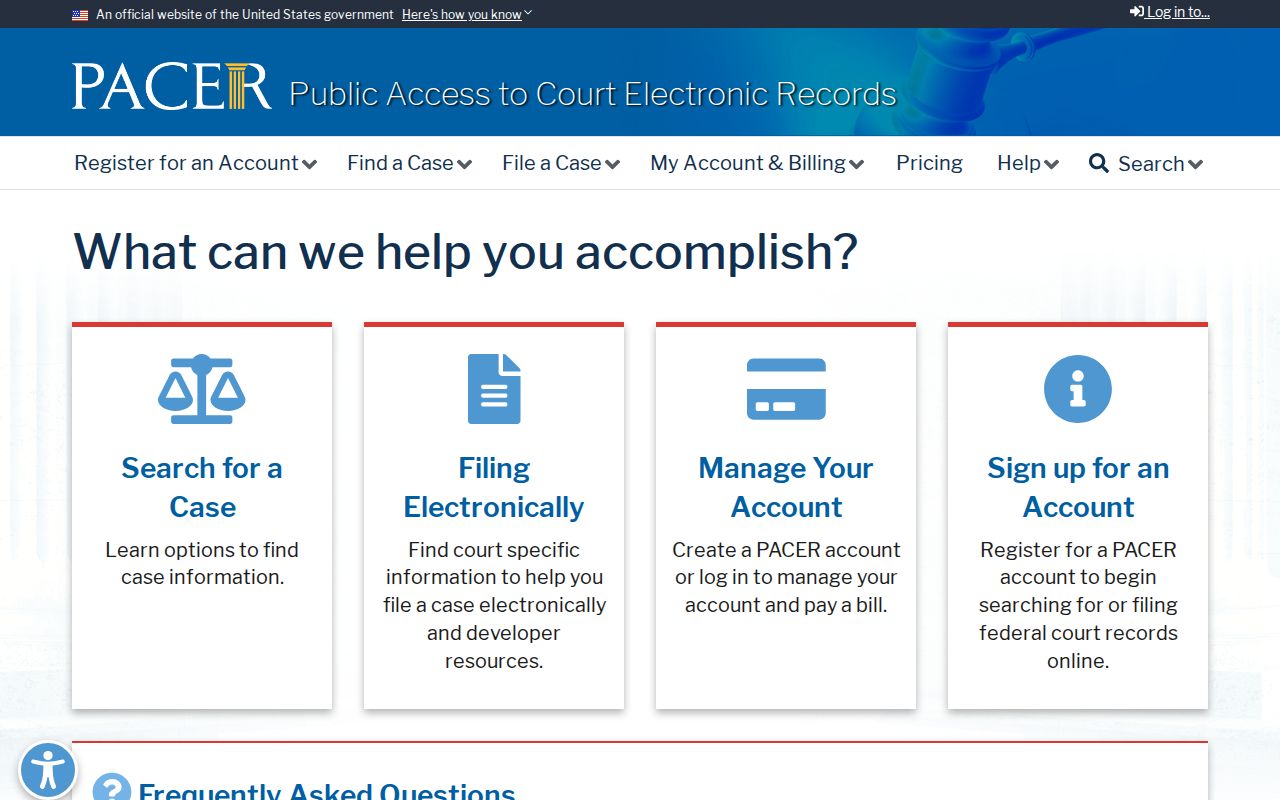
Federal results remain outside the Ouachita Clerk of Court's parish database.
The Western District of Louisiana court site identifies the federal court serving the area.
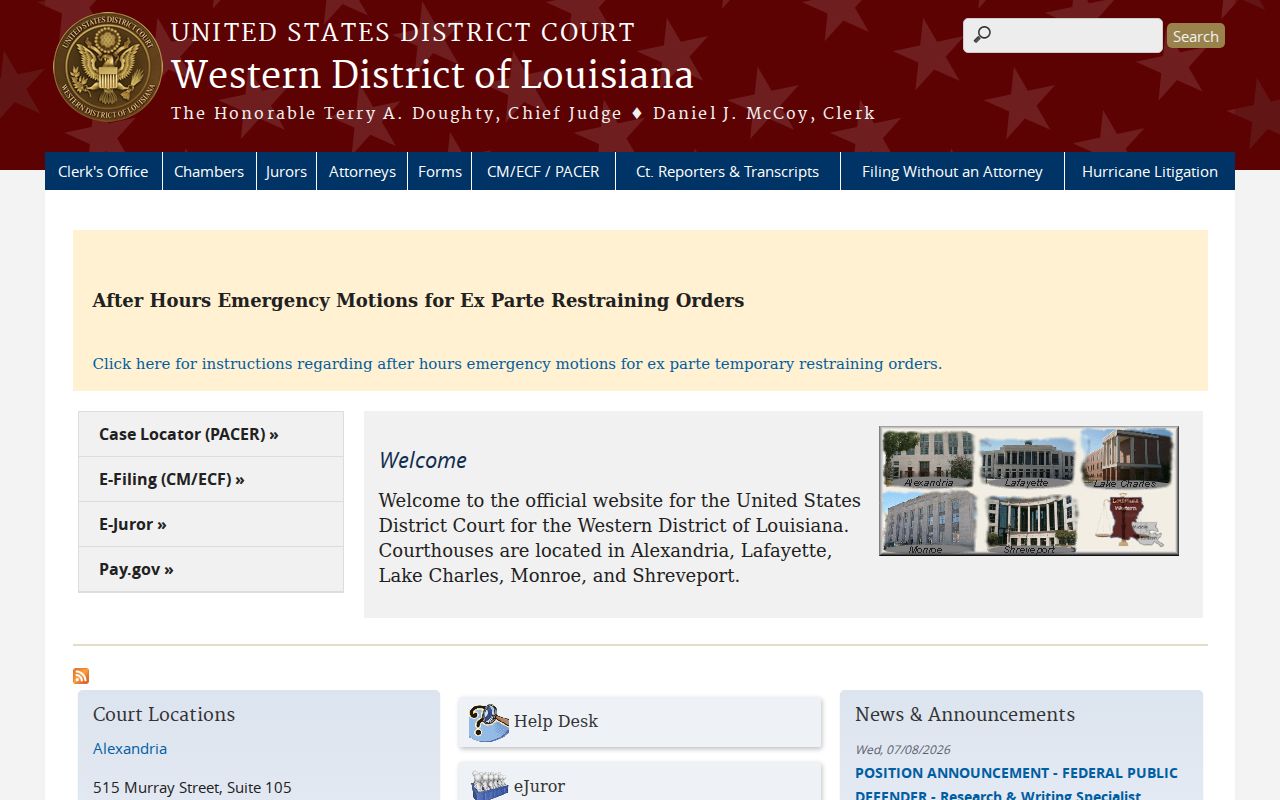
Use its court information together with PACER when the prosecution is federal.
Copies, Images, and Certification
Clerk Connect separates the index from the underlying document image. A result can identify a case, filing date, party, charge, or docket event even when the filing itself requires a per-page purchase. The clerk's published rate is $0.50 per page in the portal, and payment requires a card. A downloaded image is useful for personal research, but it is not automatically a certified copy.
When the exact form of the record matters, ask the clerk for the judgment, minute entry, charging instrument, or other named document rather than requesting “everything.” Explain whether a plain or certified copy is needed, request the current fee, and confirm delivery options. Certification authenticates the clerk's copy; it does not change the meaning of the filing or guarantee that a docket is complete through the present day.
The Clerk, DA, and Sheriff
Three downtown offices participate in a criminal matter but keep different records. The clerk at 301 South Grand Street maintains the filed court case. The Fourth Judicial District Attorney prosecutes and accepts requests for its own public records through its official request route. OPSO at the Court House Annex maintains sheriff reports, booking documentation, warrant verification, and related agency material.
Send a request to the office that created the desired record. A deputy's narrative does not become a clerk filing merely because it supports a prosecution. Likewise, the sheriff cannot certify the court's judgment, and the clerk does not control an active OPSO investigative file. Correct routing saves a rejected request and helps each custodian identify redactions or exemptions that actually apply.
Access Rules for Case Records
Louisiana court records are generally accessible, but openness does not make every field remotely visible. Juvenile matters, sealed or expunged cases, protected victim information, medical material, and sensitive identifiers may be withheld or redacted. Louisiana expungement removes qualifying information from public access without destroying every agency copy.
A blank portal result is not proof that no record exists. Ask the clerk whether the file is older, indexed differently, restricted, or available only at the courthouse. A person reviewing their own statewide history can use Louisiana State Police Right to Review, which has a different scope from the local case file.